

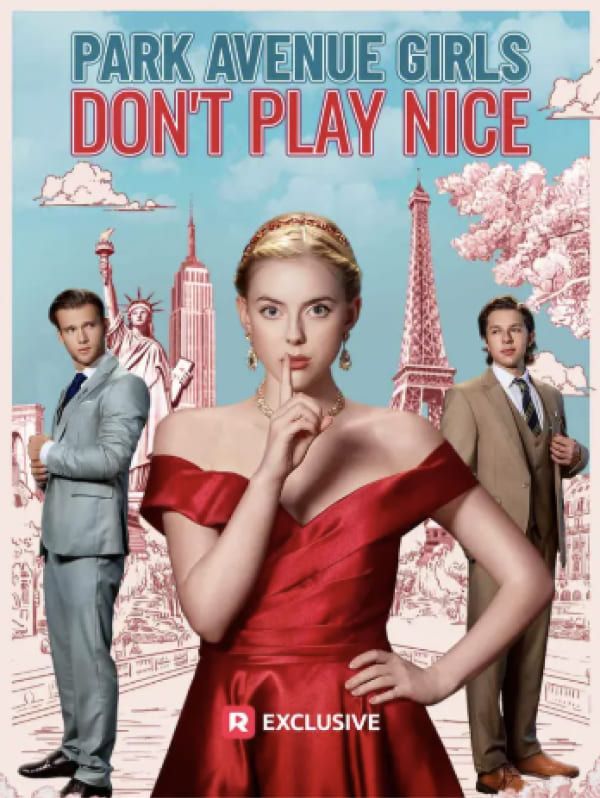
Park Avenue Girls Don’t Play Nice commits to a high-stakes social drama, with art mystery, upper-crust rivalry, and identity misdirection tossed in. Its strongest suit is its central premise: an outsider (Anna) penetrating New York’s elite, probing both her enemies and herself. The series uses its 72-episode run to pile on betrayals and small secrets that gradually erode the social facade.
The emphasis is the tension created by Anna’s dual existence. She attends art school in the daytime and after-hours infiltrates Park Avenue society—hiding out even at Kingsley parties uninvited. In Episode 2, Anna is seen trying to slip past a VIP line when Brooks intervenes and escorts her in—a meeting that sows suspicion regarding where she’s coming from. Her masterfully constructed facade is broken when she can’t recall Lila’s family’s wine of choice or a Kingsley family story, prompting hushed accusations on the part of socialites.
Brooks Whitmore’s story is equally captivating. He begins in harmony with Lila’s circle, but when he notices discrepancies in Anna’s behavior, he queries rather than retreats. His shift from accessory to guardian is particularly well-executed throughout the mid-series episodes, most particularly when he confronts Lila in private about why she sabotaged Anna’s scholarship and demands explanations his clique did not have the courage to ask. That confrontation is turning point: Brooks is no longer simply glam accessory but assertive agent.
Lila Kingsley herself is a deadly antagonist. Her sabotage includes the theft of Anna’s painting Fracture, tampering with the Paris scholarship decision, and rumor-spreading at the debutante ball to humiliate Anna. Her jealousy peaks when she orchestrates a night when Anna’s fake social credentials are put to the test, resulting in a live social exclusion in front of Brooks and the Kingsley hierarchy.
Narratively, Park Avenue Girls Don’t Play Nice excels at accumulating tiny betrayals, secret rendezvous, and mirror metaphors. But it stumbles on pacing dips: some installments recycle similar territory—Anna avoids getting caught out, Lila intensifies, Brooks wavers—without significant reveals. The final third recovers, culminating in a gala confrontation where Anna blackmails Lila into a public admission and retrieves her stolen painting. That dramatic culmination, in which Anna publicly humiliates Lila for theft and deception, is emotionally satisfying.
In terms of theme, the series challenges ambition, honesty, and social fronts. Anna’s change is not simply ambition—she’s fighting poverty and abuse. Her choice between keeping things under wraps or being open about herself establishes the emotional stakes. Yet the show doesn’t do enough with Brooks and the Kingsley family backstories, which might raise the stakes further.
Visually and texturally, the vertical episodic style demands constant peaks, and the show mostly does. Costume parties, mansion interiors, and art studio scenes offer a glamour vs grit dichotomy. In all, Park Avenue Girls Don’t Play Nice is not flawless but its core conflict—a working-class artist infiltrating high society—coupled with good leads and social tension creates an addictive, emotionally engaging drama.